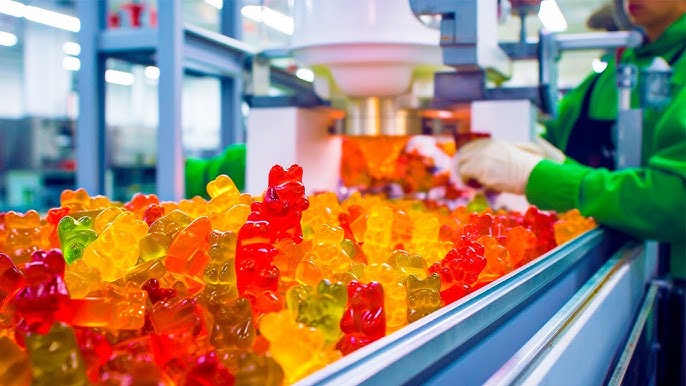
The confectionery industry is evolving rapidly, driven by changing consumer preferences, global competition, and technological advancements. Jelly candies remain one of the most popular sweet treats worldwide, prompting manufacturers to adopt innovative production technologies to stay competitive. The future of jelly candy manufacturing lies in advanced Jelly Candy Making Machine technology, which enables higher efficiency, improved product quality, and the flexibility to introduce new and unique candy offerings. Understanding these trends is essential for manufacturers aiming to stay ahead in the market.
Table of Contents
ToggleAdvanced Automation and Smart Production
Automation continues to be a major driver of efficiency in candy production. Modern jelly candy making machines already reduce manual labor, enhance precision, and improve production speed. Moving forward, machines will incorporate even more intelligent systems.
Artificial intelligence (AI) and machine learning will allow real-time monitoring and predictive process control. Sensors embedded throughout the machine will continuously track variables like temperature, viscosity, and portion size, making automatic adjustments to maintain consistency. Predictive maintenance will alert operators to potential mechanical issues before they cause downtime, ensuring uninterrupted production. Such advancements reduce waste, improve efficiency, and increase overall output, which is critical for scaling operations.
Customization and Multi-Product Capability
Consumer demand for variety, novelty, and personalization is influencing the design of future jelly candy making machines. Manufacturers are increasingly seeking machines that can produce multiple product types on a single line. Future machines will allow multi-layer, multi-color, and multi-flavor candy production simultaneously, enabling unique combinations of textures, flavors, and designs.
Quick-change mold systems will allow rapid switching between shapes and sizes, from classic fruit shapes to custom logos and themed designs. This flexibility not only reduces downtime but also allows manufacturers to launch seasonal products or limited-edition candies more efficiently. By leveraging these capabilities, companies can respond to consumer trends quickly while maintaining production efficiency.
Integration of Digital Technologies
Digitalization will transform jelly candy production by connecting machines to cloud-based monitoring and control systems. Digital twins—virtual models of production lines—will allow manufacturers to simulate and optimize processes before implementing changes on the physical line. This reduces trial-and-error experimentation, saves resources, and accelerates product development.
Remote monitoring and control will also become more prevalent. Operators will be able to adjust machine parameters, monitor performance, and access analytics in real time from anywhere. Such integration ensures consistent quality and allows companies to respond swiftly to issues without halting production.
Energy Efficiency and Sustainability
Sustainability is a growing concern in the confectionery industry. Future jelly candy making machines will focus on energy efficiency, reduced water consumption, and minimized material waste. Advanced cooking systems, heat recovery units, and variable frequency drives (VFDs) will lower operational costs and environmental impact.
Additionally, machines will be optimized for alternative ingredients such as natural sweeteners, plant-based gelling agents, and functional additives like vitamins or probiotics. This aligns with consumer demand for healthier and eco-friendly products while reducing the environmental footprint of production.
Enhanced Coating and Finishing Techniques
The finishing stage of jelly candy production is increasingly important for product appeal. Advanced coating systems will allow precise application of sugar, chocolate, or flavor coatings. Machines will be able to handle complex designs, multi-textured surfaces, and uniform finishes, ensuring high-quality products even at high production volumes.
Future systems may also incorporate functional coatings, such as vitamin-enriched or probiotic layers, allowing manufacturers to tap into health-conscious markets while maintaining visual appeal and taste.
Modular and Flexible Designs
Flexibility in production is critical for manufacturers aiming to innovate and scale efficiently. Modular jelly candy making machines will allow for easy expansion and integration of additional units, such as extra mixers, depositing heads, or coating systems.
This design approach ensures that manufacturers can upgrade capabilities without replacing the entire production line. Multi-functional machines that combine cooking, molding, cooling, and coating into a single, streamlined system will reduce production space requirements and optimize workflow.
Conclusion
The future of jelly candy making machines is defined by automation, digitalization, sustainability, and flexibility. Advanced sensors, AI-driven process control, predictive maintenance, and multi-product capabilities will enable manufacturers to produce high-quality, innovative candies efficiently.
Investing in a modern Jelly Candy Making Machine equipped with future-ready technology will allow manufacturers to reduce labor costs, minimize waste, and respond rapidly to changing consumer preferences. The integration of energy-efficient systems and modular designs ensures scalability, enabling businesses to meet market demand while remaining environmentally conscious.
As technology continues to advance, manufacturers who adopt these trends will be well-positioned to lead the industry. Future-ready jelly candy making machines offer the tools to enhance productivity, innovate continuously, and maintain a competitive edge in the dynamic global confectionery market.